
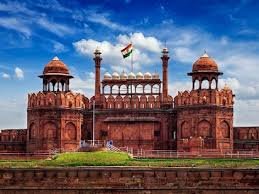
Red Fort: Explore the Majestic Symbol of Mughal Power
Discover the Stunning Architecture and Rich History
Built in 1648 by Mughal Emperor Shah Jahan, Red Fort stands as one of India's most powerful historical landmarks. Its massive red sandstone walls stretch nearly 2.5 km, enclosing a world of palaces, gardens, and pavilions that once defined Mughal luxury.Key highlights include:
Diwan-i-Aam – The public hall where the Emperor addressed his people
Diwan-i-Khas – The private chamber housing the legendary Peacock Throne
Rang Mahal – A beautifully decorated palace built exclusively for royal women
Enjoy the Captivating Light and Sound Show
Every evening, Red Fort transforms into a living story. The light and sound show narrates 5,000 years of Delhi's history, with dramatic lighting illuminating the fort's walls while a compelling voiceover walks you through Mughal glory and India's independence struggle.
Explore the Museums Inside the FortThree fascinating museums sit within the fort's grounds:
Archaeological Museum – Mughal artifacts and manuscripts
Swatantrata Sangram Museum – India's independence movement exhibits
Museum of Archaeology – Ancient coins and royal weaponsWear comfortable shoes — there's plenty of ground to cover!
Qutub Minar: Witness the Tallest
Brick Minaret in the World
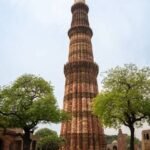
Marvel at the Intricate Carvings and Islamic Calligraphy
Standing at 73 meters tall, Qutub Minar is genuinely breathtaking up close. Built in 1193 by Qutb ud-Din Aibak, this red sandstone tower is wrapped in stunning geometric patterns and Quranic verses carved directly into the stone.
Key features to look out for:
Five distinct stories, each with its own unique architectural styleI
ntricate floral motifs blending Hindu and Islamic design traditions
Arabic calligraphy running in elegant bands around each tierA
slight lean of about 65 cm that adds to its ancient charm
Explore the Surrounding Qutub Complex and Iron Pillar
The minaret is just one part of a larger UNESCO World Heritage Site worth wandering through for at least two hours.
The Iron Pillar alone is worth the visit — scientists still debate exactly how ancient craftsmen created metal so resistant to corrosion. Wear comfortable shoes, as the complex covers a large area with uneven ground.
India Gate: Pay Tribute at Delhi's Iconic War Memorial

Experience the Solemnity of the Amar Jawan Jyoti
The eternal flame burning beneath India Gate honors soldiers who fell in World War I and the 1971 Indo-Pakistan War. Standing before it feels genuinely moving — thousands of names are etched into the sandstone arch, making history feel personal and real. Comfortable
Enjoy a Relaxing Picnic in the Surrounding Lush Gardens
The sprawling lawns around India Gate are perfect for unwinding. Families spread out on the grass, vendors sell ice cream and bhel puri, and the atmosphere stays wonderfully relaxed. Pack a snack, grab a spot, and soak it all in.
Visit at Night for a Breathtaking Illuminated View
India Gate transforms after sunset. Floodlights bathe the monument in warm golden light, creating a dramatic contrast against the dark sky. The crowds thin out, the temperature drops, and the whole place takes on a magical quality. Easily one of Delhi's best nighttime sights.
Explore the Nearby Rajpath for a Grand View of Delhi
Rajpath — now called Kartavya Path — stretches majestically from India Gate toward Rashtrapati Bhavan. Walking this broad ceremonial boulevard gives you a stunning perspective of Delhi's grand colonial-era planning. It's especially spectacular during Republic Day preparations when the entire stretch buzzes with patriotic energy.